
Role of Diplomas in Homeschool: Validation and Access

Every American homeschool parent faces a unique moment when the years of lessons and late-night study sessions build toward something much bigger: creating a diploma that truly honors your child’s educational journey. This document does more than mark an academic milestone—it becomes proof of hard work to colleges and future employers. By understanding the options for a homeschool diploma and how to craft credible transcripts, you can confidently celebrate your student’s achievements and help them take their next big step.
Table of Contents
- What Is A Homeschool Diploma? Key Facts
- Types Of Homeschool Diplomas And Variations
- How Colleges View Homeschool Diplomas
- Legal Requirements For Homeschool Graduation
- Common Challenges And Mistakes To Avoid
Key Takeaways
| Point | Details |
|---|---|
| Homeschool Diplomas Are Validated by Parents or Administrators | Unlike traditional diplomas, homeschool diplomas are issued by parents or designated administrators and are legally recognized by colleges and employers, enhancing student credibility. |
| Types of Homeschool Diplomas Offer Unique Benefits | Various diploma types—including parent-issued, umbrella school, and accredited online program diplomas—provide flexibility and determined recognition levels for different educational paths. |
| Colleges Recognize Homeschool Diplomas More than Ever | As extra documentation such as transcripts and standardized test scores enhance credibility, many colleges have specific policies in place for accepting homeschool graduates. |
| Understanding Legal Requirements Is Crucial | Homeschool graduation regulations vary by state, and parents must comply with local laws, maintain records, and fulfill requirements to ensure legitimacy. |
What Is a Homeschool Diploma? Key Facts
A homeschool diploma is an official document awarded to students who complete their secondary education through home-based learning programs. Unlike traditional public school diplomas, homeschool diplomas are typically created and administered directly by parents or homeschool administrators. These documents validate a student’s academic achievement and represent the successful completion of a comprehensive high school curriculum.
Homeschool diplomas have several important characteristics:
- Issued by parents or designated homeschool administrators
- Customized to reflect individual student achievements
- Legal and generally accepted by colleges and employers
- Can be complemented by detailed academic transcripts
Homeschool diploma recognition varies by state, with some regions providing more structured guidelines than others. Many states allow families significant flexibility in determining graduation requirements, which means parents play a crucial role in defining academic standards and preparing documentation.
To enhance diploma credibility, homeschool families often take additional steps to validate their students’ educational achievements. These may include:
- Developing comprehensive transcripts
- Participating in standardized testing
- Obtaining accreditation through recognized homeschool organizations
- Preparing detailed course descriptions
Pro Tip: Create a professional-looking diploma that accurately documents your student’s educational journey and includes specific academic details to increase its perceived value and legitimacy.
Types of Homeschool Diplomas and Variations
Homeschool diplomas come in several distinct variations, each offering unique advantages for students completing their secondary education outside traditional school systems. Different types of homeschool diplomas provide families with flexible options for documenting academic achievements and preparing students for future educational or professional opportunities.
The primary types of homeschool diplomas include:
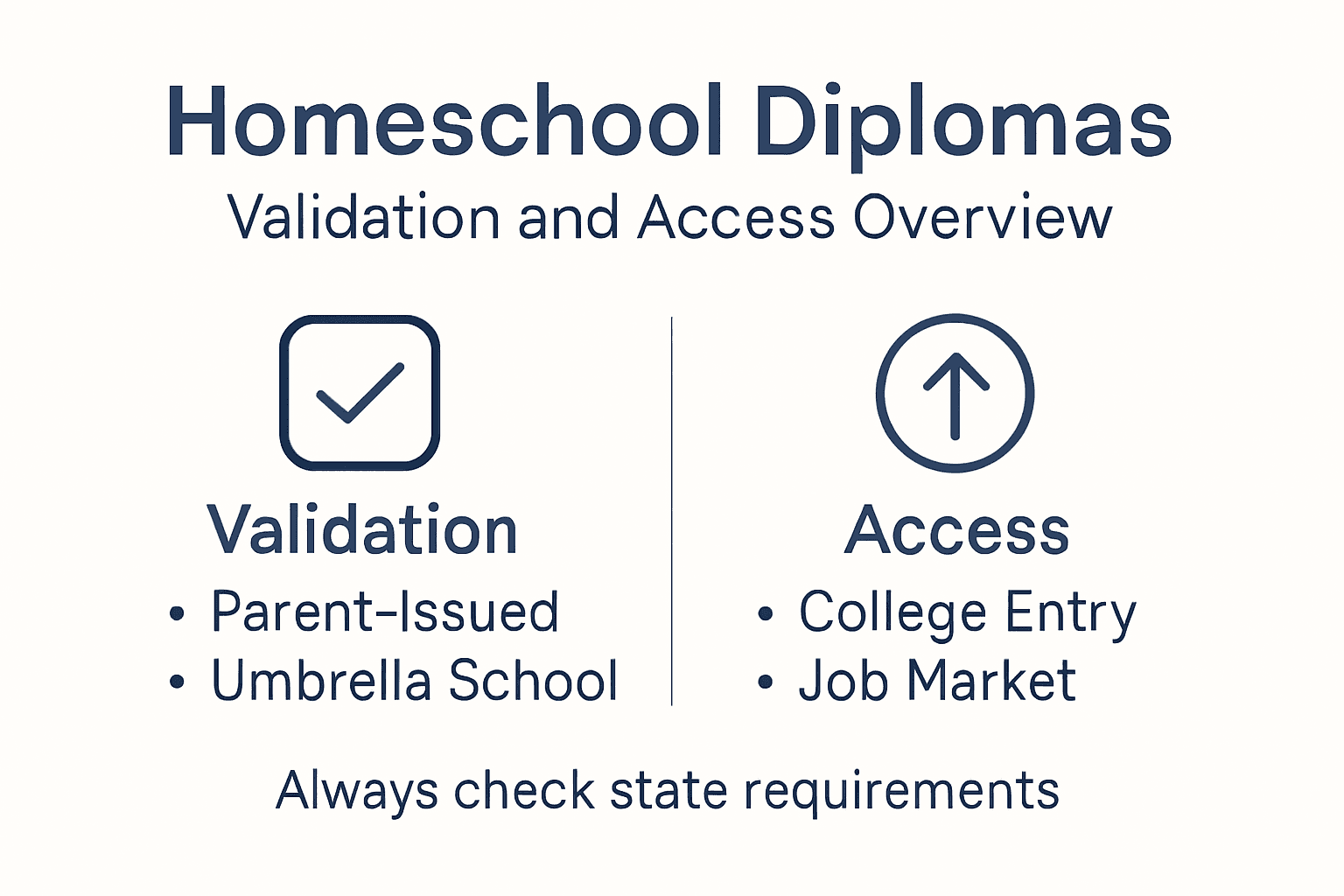
- Parent-Issued Diplomas: Directly created and administered by homeschooling parents
- Umbrella School Diplomas: Issued through structured homeschool support organizations
- Accredited Online Program Diplomas: Provided by recognized virtual educational platforms
- Dual Enrollment Diplomas: Combining homeschool curriculum with traditional educational credits
Each diploma type offers distinct benefits and potential challenges. Parent-issued diplomas provide maximum flexibility but might require additional documentation to demonstrate academic rigor. Umbrella school and accredited online program diplomas typically offer more structured academic oversight and increased credibility with colleges and employers.

Here is a comparison of major types of homeschool diplomas:
| Diploma Type | Who Issues It | Typical Recognition Level | Best For |
|---|---|---|---|
| Parent-Issued | Homeschooling parent | Varies by state and college | Maximum flexibility |
| Umbrella School | Homeschool support program | Generally higher | Structured oversight |
| Accredited Online Program | Recognized online institution | Widely accepted | College-bound students |
| Dual Enrollment | Combination of sources | Strong academic credibility | Early college experience |
Homeschool families can enhance diploma recognition by:
- Maintaining detailed academic transcripts
- Participating in standardized testing
- Obtaining additional certifications
- Documenting comprehensive course descriptions
Pro Tip: Carefully research diploma options in your state and choose a format that provides the most comprehensive documentation of your student’s academic achievements.
How Colleges View Homeschool Diplomas
Homeschool diplomas have gained significant recognition among colleges nationwide, with many institutions developing specific admission policies to accommodate students from non-traditional educational backgrounds. University admissions policies vary significantly regarding homeschool credentials, creating a complex landscape for prospective students.
College acceptance typically depends on several key factors for homeschool graduates:
- Comprehensive academic transcripts
- Standardized test scores (SAT/ACT)
- Detailed course descriptions
- Supplemental portfolio demonstrating academic achievements
- Potential interviews or additional evaluation processes
Most colleges now view homeschool diplomas as legitimate academic credentials, especially when students can demonstrate academic rigor through supplementary documentation. Many universities have dedicated admissions protocols specifically designed for homeschooled applicants, recognizing the unique educational experiences these students bring.
Homeschool students can strengthen their college applications by:
- Taking standardized national exams
- Obtaining dual enrollment credits
- Creating comprehensive academic portfolios
- Seeking accreditation through recognized educational programs
Pro Tip: Proactively communicate with college admissions offices early in your application process to understand their specific requirements for homeschool diploma evaluation.
Legal Requirements for Homeschool Graduation
Homeschool graduation involves navigating a complex landscape of legal requirements that vary significantly across different jurisdictions. Homeschooling laws differ widely between states and regions, making it crucial for families to understand their specific local regulations before issuing a diploma.
Key legal considerations for homeschool graduation include:
- Mandatory notification to local education authorities
- Compliance with state-specific curriculum guidelines
- Documentation of academic progress
- Fulfillment of credit requirements
- Potential standardized testing or assessment protocols
Each state maintains unique regulations regarding homeschool graduation. Some states require detailed record-keeping, while others provide more flexible frameworks for families to determine educational milestones. Parents must carefully track academic achievements, maintain comprehensive transcripts, and ensure their educational approach meets minimum state standards.
Below is a summary of common legal aspects across states:
| Legal Aspect | Common State Requirements | Example Documentation |
|---|---|---|
| Notification | Submit intent to homeschool | Official state form |
| Curriculum Standards | Follow state-specific guidelines | Planned course outline |
| Record-Keeping | Document student progress | Academic transcripts |
| Assessment | Pass state-approved evaluations | Standardized test results |
| Graduation Credits | Meet minimum credit expectations | Credit summary sheet |
Homeschool families can demonstrate legal compliance by:
- Researching specific state homeschool regulations
- Maintaining detailed academic records
- Completing required assessments
- Documenting curriculum and learning objectives
- Consulting local homeschool support organizations
Pro Tip: Consult your state’s homeschool association and local educational authorities to get the most current and accurate graduation requirement guidelines.
Common Challenges and Mistakes to Avoid
Homeschool diploma preparation involves navigating complex challenges that can significantly impact a student’s educational journey. Common homeschooling challenges often stem from unrealistic expectations and rigid approaches that limit learning flexibility and student engagement.
Key challenges homeschool families frequently encounter include:
- Becoming overly structured and mimicking traditional school models
- Struggling with consistent motivation and academic pacing
- Managing multiple learning levels simultaneously
- Balancing educational goals with household responsibilities
- Addressing potential social interaction limitations
Successful homeschool families recognize that flexibility and personalization are crucial to overcoming these obstacles. Parents must be willing to adapt their teaching strategies, recognize individual student learning styles, and create dynamic educational environments that promote genuine intellectual curiosity and independent learning.
To minimize potential mistakes, homeschool families should:
- Establish clear educational objectives
- Develop realistic and adaptable curriculum plans
- Create structured yet flexible learning schedules
- Seek external support and community resources
- Regularly assess and adjust educational approaches
Pro Tip: Regularly review and adjust your homeschool approach, treating educational planning as an evolving process rather than a rigid, unchangeable system.
Secure Your Homeschool Achievements with Custom Diplomas
Navigating the complexities of homeschool diploma validation can be overwhelming. With various types of diplomas, legal requirements, and college expectations to consider, it is essential to have a professional looking diploma that truly reflects your student’s accomplishments. Whether you need a parent-issued diploma or an accredited style for enhanced credibility, having a high-quality custom diploma is a key step toward recognizing your homeschool success.

Celebrate your educational milestones with confidence by visiting Hey Congrats!. Our platform offers authentic-looking customizable diplomas, transcripts, and diploma covers designed to match your homeschool journey. Act now to create a personalized diploma that adds legitimacy and pride to your student’s hard work. Explore options for replacement diplomas and discover how easy it is to honor your unique educational path at Hey Congrats!. Start your order today and elevate your homeschool graduation experience.
Frequently Asked Questions
What is a homeschool diploma?
A homeschool diploma is an official document issued to students who complete their secondary education through home-based learning programs, serving as validation of their academic achievements.
How do colleges view homeschool diplomas?
Colleges generally recognize homeschool diplomas as legitimate credentials, especially when accompanied by comprehensive academic transcripts and standardized test scores.
What are the different types of homeschool diplomas?
The main types include parent-issued diplomas, umbrella school diplomas, accredited online program diplomas, and dual enrollment diplomas, each offering unique benefits and challenges.
What legal requirements should be followed for homeschool graduation?
Legal requirements can vary by state but typically include notifying local education authorities, maintaining academic records, and ensuring compliance with curriculum standards.


