
Custom Diploma Creation Process: Step-by-Step Guide for 2026

Finding a truly authentic custom diploma can feel challenging when every detail matters for personal collection, film sets, or theater props. Authenticity relies on gathering the right information and choosing features that match real-world standards, from institutional branding to advanced security elements. This guide explains how to create a diploma with realistic design elements and accurate personal details so your finished document looks and feels genuine no matter the project.
Table of Contents
- Step 1: Gather Required Information and Materials
- Step 2: Select Design Preferences and Custom Features
- Step 3: Personalize Diploma Details Accurately
- Step 4: Review and Approve the Final Design Proof
- Step 5: Verify Quality and Finalize Order
Quick Summary
| Main Point | Explanation |
|---|---|
| 1. Gather Accurate Information | Collect personal identification details, educational institution name, and other relevant documents for diploma creation. |
| 2. Choose Design Elements Wisely | Select fonts, colors, and security features that enhance the diploma’s authenticity and visual appeal. |
| 3. Ensure Detail Precision | Enter names, dates, and academic details accurately to meet verification standards and enhance credibility. |
| 4. Conduct a Thorough Review | Examine the final design proof carefully for any errors that could impact the diploma’s legitimacy and visual quality. |
| 5. Verify Quality Before Finalizing | Assess print resolution, paper quality, and security features to ensure the diploma meets professional standards. |
Step 1: Gather Required Information and Materials
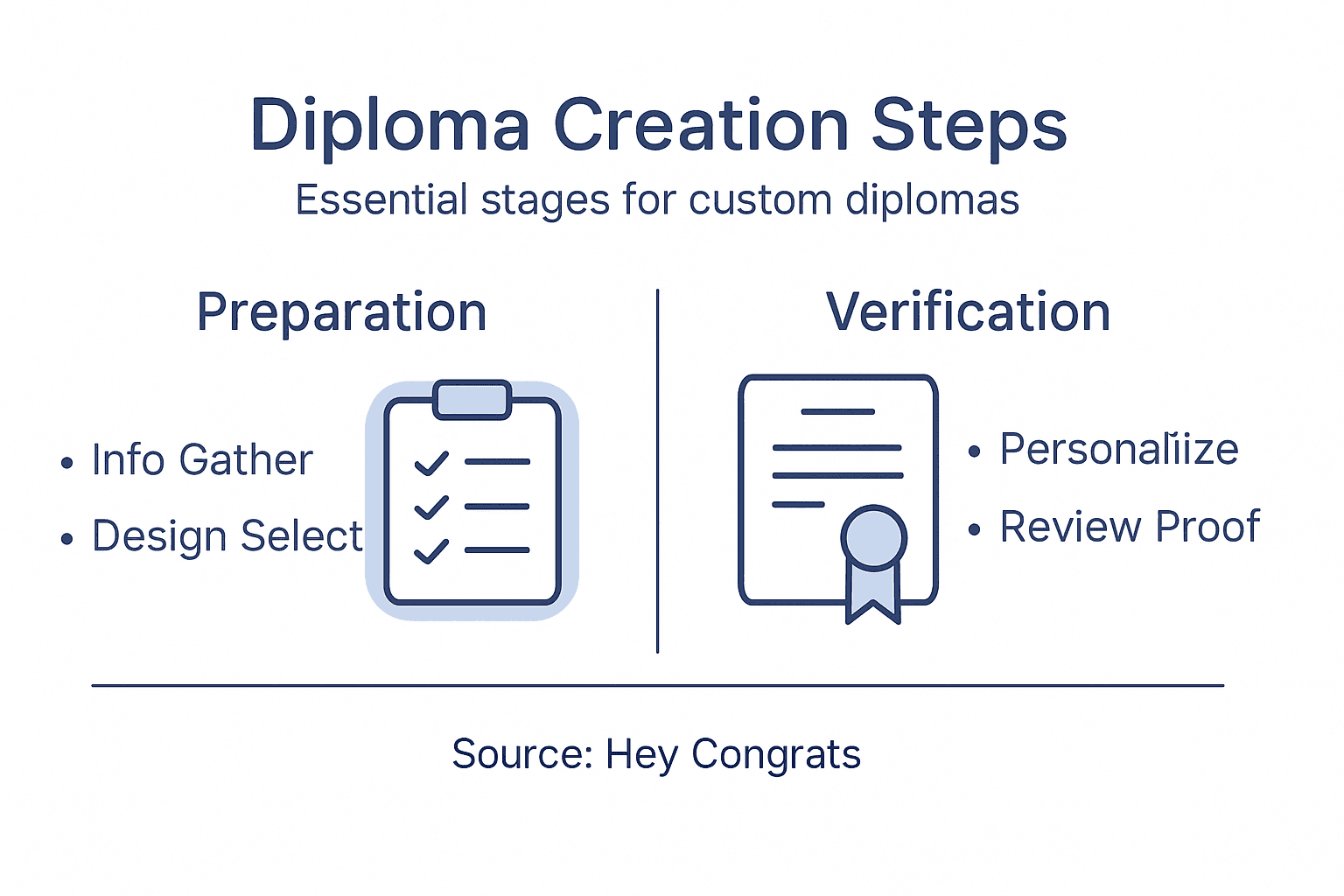
Creating a custom diploma requires strategic preparation and meticulous attention to detail. In this stage, you’ll collect the essential documents and information needed to craft an authentic-looking educational certificate that meets specific design requirements.
To start, you’ll need to compile several key pieces of information that will form the foundation of your diploma. Begin by gathering personal identification details, which typically include:
- Full legal name
- Date of birth
- Place of birth
- Graduation date
- Educational institution name
These details are crucial because diploma verification processes require precise and accurate information. Different countries have unique documentation standards, so understanding the specific requirements for your target region is essential.
Depending on your specific project, you might also need supplementary documents like official transcripts or academic records. Country-specific document requirements can vary significantly, so research the exact specifications for your chosen educational context.
As you compile these materials, organize them systematically and double-check each detail for accuracy. Precision is key when creating a realistic diploma design.
Pro tip: Create a digital and physical backup of all gathered documents to ensure you have multiple reference points during the diploma creation process.
Step 2: Select Design Preferences and Custom Features
Designing a custom diploma involves strategic choices that transform a simple document into an authentic, personalized certificate. In this step, you’ll explore the exciting world of diploma customization, selecting features that will make your document unique and visually compelling.
Start by examining the extensive design customization options available for your project. These typically include:
- Diploma template selection
- Color scheme preferences
- Font styles and typography
- Background design elements
- Institutional logo placement
- Security feature integration
Selecting the right design elements is crucial for creating a realistic and professional-looking diploma.
Diploma manufacturing experts recommend considering advanced security features like watermarks, microtext, and unique anti-copy protections. These details not only enhance the document’s authenticity but also provide an additional layer of visual complexity.
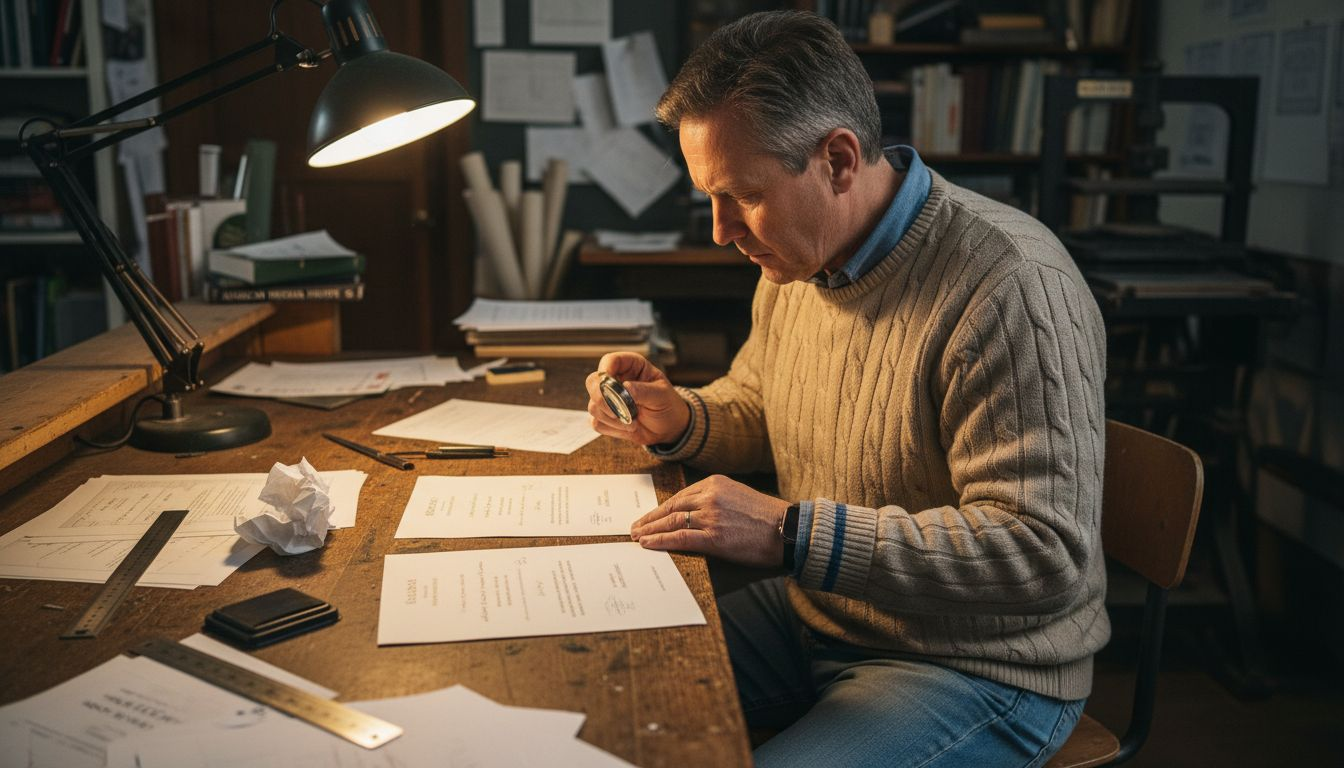
Consider the specific context of your diploma. Are you creating a document for theatrical purposes, historical reenactment, or personal memorabilia? Each scenario might require a slightly different design approach, so think carefully about the nuanced details that will make your diploma look genuine.
Pro tip: Request multiple design proofs and compare them side by side to ensure you select the most realistic and visually appealing option.
Step 3: Personalize Diploma Details Accurately
Personalizing your diploma requires meticulous attention to detail and strategic data entry. This crucial step transforms a generic document into a specific, meaningful representation of academic achievement.
When entering personal and institutional details, precision is paramount. Diploma verification processes require exact information matching across all documentation. Pay close attention to the following critical elements:
- Full legal name (exactly as it appears on official documents)
- Precise graduation date
- Complete institutional name
- Specific degree or program title
- Academic major or concentration
- Cumulative grade point average
Accuracy in diploma details prevents potential verification challenges and ensures document credibility.
Consider the specific context of your diploma. Some projects might require additional nuanced details like Latin honors, academic distinctions, or specific departmental recognitions. These elements can dramatically enhance the document’s authenticity and professional appearance.
Double-check every single character, ensuring no typographical errors compromise the diploma’s perceived legitimacy. A single misplaced letter or incorrect date can undermine the entire document’s credibility.
Here is a summary of important diploma personalization elements and their impact on authenticity:
| Diploma Element | Importance for Verification | Effect on Document Authenticity |
|---|---|---|
| Exact legal name | Prevents identity mismatches | Ensures formal credibility |
| Correct graduation date | Supports timeline consistency | Verifies chronological accuracy |
| Institutional details | Confirms educational origin | Enhances official presentation |
| Degree and program title | Specifies academic achievement | Demonstrates educational depth |
| Academic distinctions | Highlights outstanding merit | Adds prestige and uniqueness |
| Grade point average | Validates academic performance | Reflects achievement reliability |
Pro tip: Use official academic documents as direct reference when inputting diploma details to guarantee maximum accuracy.
Step 4: Review and Approve the Final Design Proof
The final design proof represents your last opportunity to ensure every detail of your custom diploma meets your exact specifications. This critical review stage demands your full attention and a systematic approach to validation.
Carefully examine the digital or physical proof, focusing on these key areas:
- Spelling and name accuracy
- Text alignment and formatting
- Color reproduction
- Paper texture and quality
- Placement of institutional logos
- Overall visual authenticity
Meticulous review prevents potential errors that could compromise the diploma’s credibility.
Pay special attention to minute design elements that contribute to the document’s perceived authenticity. Diploma verification details require precise examination of every visual component.
If any discrepancies are noticed, request immediate corrections before final production. Remember that even microscopic details can significantly impact the overall perception of the document’s legitimacy.
Pro tip: Create a side-by-side comparison with authentic reference documents to identify any potential inconsistencies in your design proof.
Step 5: Verify Quality and Finalize Order
The final stage of your diploma creation journey involves a comprehensive quality assessment and order confirmation. This critical phase ensures that your custom document meets the highest standards of authenticity and visual precision.
Begin by conducting a thorough diploma quality verification that covers multiple critical aspects:
- Print resolution and clarity
- Color consistency and accuracy
- Paper weight and texture
- Security feature integration
- Overall structural integrity
- Exact alignment of design elements
A meticulous final review prevents potential disappointments and guarantees your complete satisfaction.
Carefully compare the proof against your original specifications. Visual authentication requires a systematic approach, examining each element with a critical eye. Small details can dramatically impact the document’s perceived legitimacy.
Before finalizing your order, confirm that all personal information, institutional details, and design elements perfectly match your intended vision. Review every character, ensuring absolute accuracy.
Below is a comparison of quality checks for final diploma verification and their impact:
| Quality Check | What it Assesses | Impact on Final Diploma |
|---|---|---|
| Print resolution | Visual clarity and detail | Professional appearance |
| Color accuracy | True-to-life representation | Realistic, trustworthy look |
| Paper texture | Tactile authenticity | Physical legitimacy |
| Security features | Tamper-resistance | Enhanced document security |
| Alignment of design | Symmetry and placement | Clean and official presentation |
| Structural integrity | Durability and build quality | Longevity and lasting value |
Pro tip: Request a high-resolution digital preview and measure the physical proof against an authentic reference document to catch any subtle discrepancies.
Bring Your Custom Diploma Vision to Life with Hey Congrats
The detailed steps in the Custom Diploma Creation Process highlight how important accuracy and authenticity are when crafting personalized educational documents. If you want to avoid common challenges like errors in legal names or graduation dates and ensure your diploma features precise institutional details and security elements, our Diploma Maker | Custom Replacement & Novelty Diplomas – Hey Congrats! is the perfect solution. We specialize in providing high-quality, realistic diplomas tailored to your exact specifications with fast shipping and outstanding customer support.
Experience the satisfaction of receiving a beautifully crafted diploma without the stress of design or data entry mistakes. Visit Hey Congrats now to explore our customizable options for diplomas and certificates, including our collection of High School Diploma Maker | Replacement Diplomas & Transcripts – Hey Congrats!. Start your order today and take control over every detail, ensuring an authentic, professionally finished product that truly honors your educational achievements or project needs.
Frequently Asked Questions
What information do I need to gather to create a custom diploma?
To create a custom diploma, you need personal identification details such as your full legal name, date of birth, place of birth, graduation date, and the name of the educational institution. Start by compiling these key documents and double-checking for accuracy before proceeding to the design stage.
How do I select the design preferences for my diploma?
Select design preferences by considering elements like diploma templates, color schemes, font styles, and logo placements. Review various design options, and request proofs to find the combination that best represents your vision.
Why is accuracy important when personalizing diploma details?
Accuracy is crucial because diploma verification processes require exact matches to official documents. Ensure all details, like your name and graduation date, are entered correctly to avoid any issues with credibility.
What should I focus on when reviewing the final design proof of my diploma?
When reviewing the final design proof, focus on spelling accuracy, text alignment, color consistency, and the overall visual authenticity of the document. Carefully examine every detail and make necessary corrections before finalizing the order.
How can I verify the quality of the printed diploma before finalizing my order?
Verify the quality of your printed diploma by assessing print resolution, color accuracy, paper texture, and alignment of design elements. Conduct a thorough inspection to ensure it meets your specifications and looks professional.


